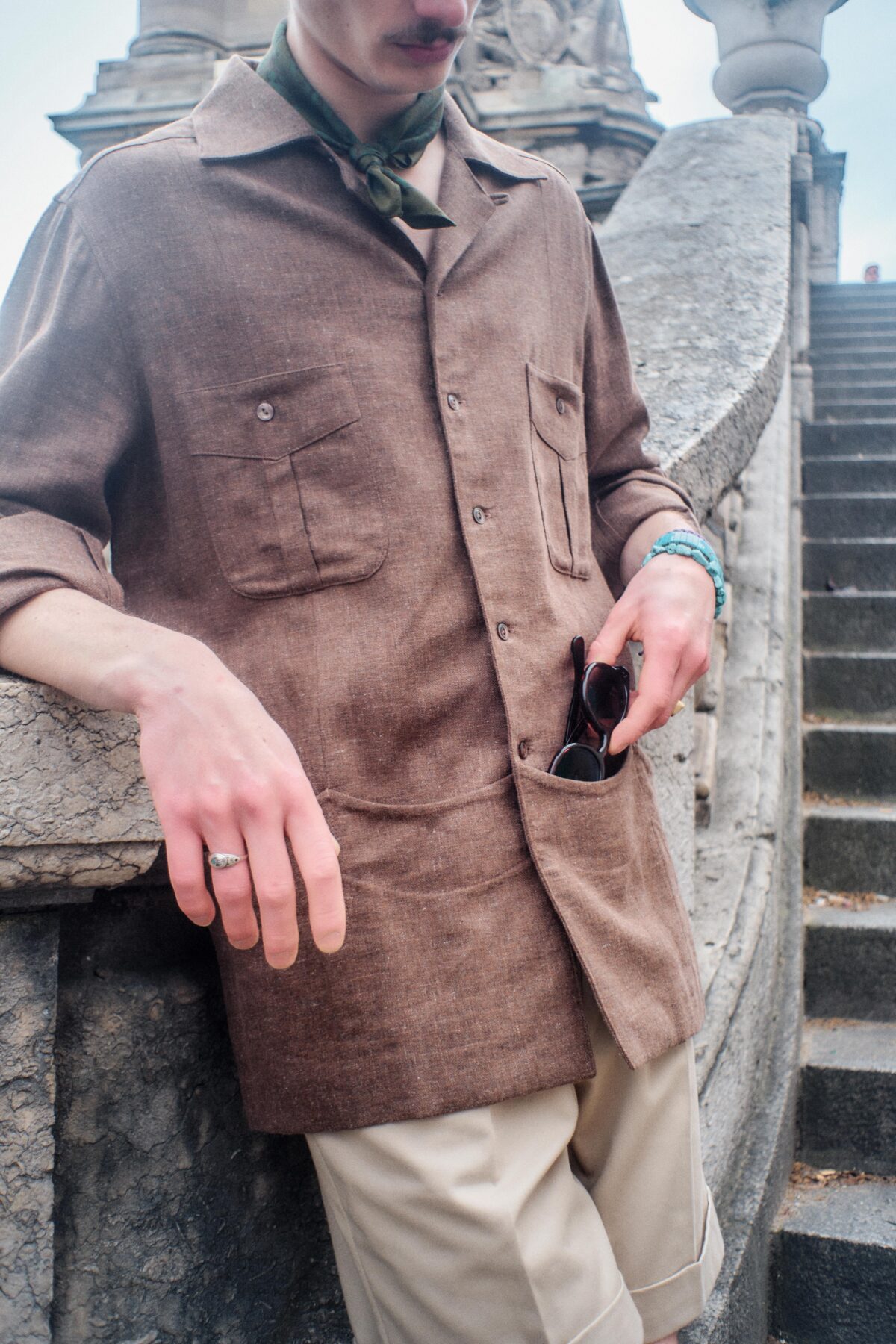
In the 1961 film “Le cave se rebiffe” (The Counterfeiters of Paris), directed by Gilles Grangier, a legendary scene unfolds. At the start of the movie, Bernard Blier—alias Charles Lepicard—presents his scheme to Jean Gabin, known as “Le Dabe.” Under a scorching sun at the edge of a racetrack, Lepicard is struggling, drenched in sweat, eventually forced to shed his suit jacket. “Le Dabe,” however, remains perfectly composed: a straw hat, wide-leg tropical wool trousers, and most notably, a long shirt worn untucked—almost like a safari jacket.
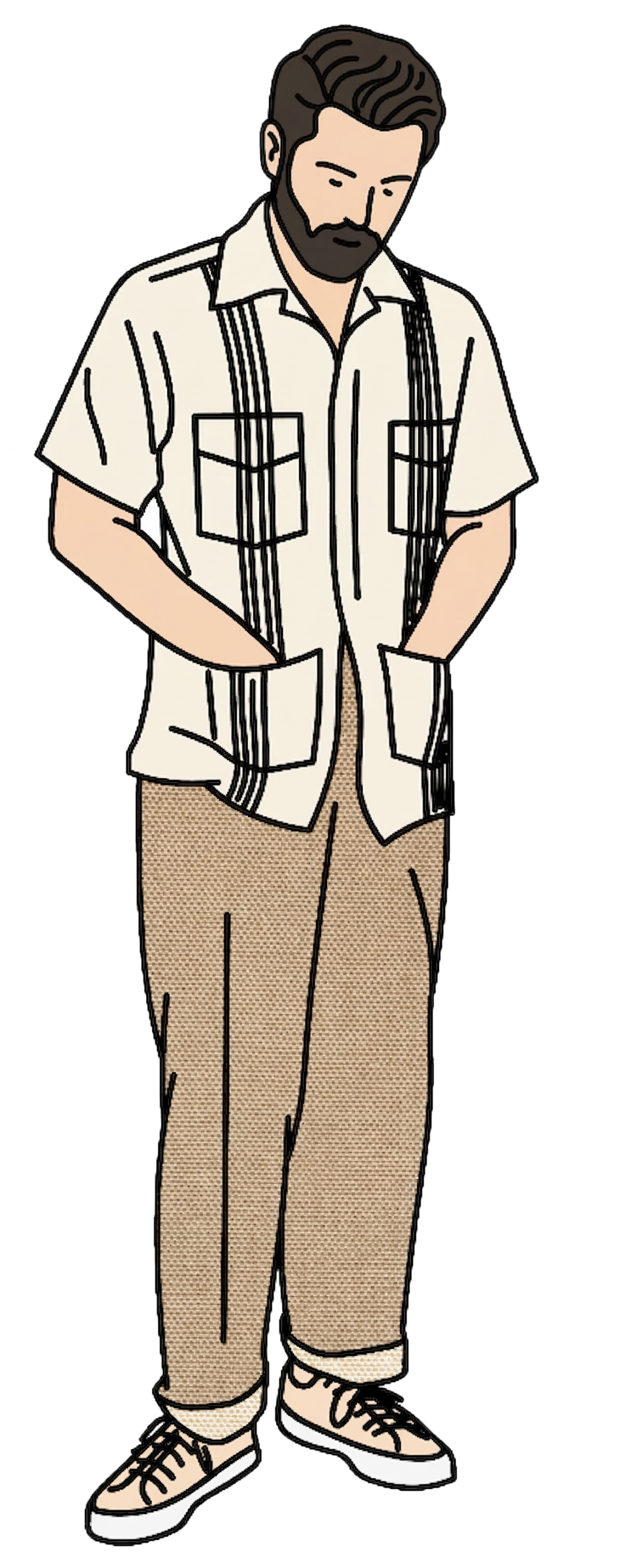
This shirt has a name: the Guayabera.
Found throughout Central and South America, it has become the official attire of Cuba. Its exact origin, as is often the case, is shrouded in myth. Some say the Spaniards drew inspiration from embroidered shirts arriving from the Philippines, a story debated—sometimes passionately—to this day. What is certain, however, is that the guayabera has earned its place as a garment designed for the heat, yet accepted as formal wear in countries where sartorial standards are never compromised, even in the height of summer.
Because the guayabera is more than just a shirt.
Traditionally cut from cotton voile or a linen-cotton blend—often in white or ochre—it is instantly recognizable by its four front pockets and, above all, its pleated bands. Two in the front, three in the back, these bands are crafted from the same fabric and detailed with five or six delicate stitched pin-tucks. These details change everything: the guayabera ceases to be a mere shirt and becomes a lightweight jacket.
For those in the know, it remains one of the finest ways to stay elegant without ever compromising on comfort.